The Complete Guide to Choosing the Right Air Compressor Spare Parts
Air compressors are the backbone of countless industries, from manufacturing and automotive workshops to construction, food processing, healthcare, and pharmaceuticals. These powerful machines keep production lines moving, power pneumatic tools, and ensure businesses can operate efficiently every day. However, like any industrial equipment, air compressors require regular maintenance and timely replacement of worn components to continue performing at their best.
Choosing the right air compressor spare parts is one of the most important decisions you can make when maintaining your equipment. Selecting the wrong part can lead to reduced efficiency, increased energy costs, unexpected downtime, and even complete compressor failure. On the other hand, using the correct replacement parts helps extend the life of your compressor, improves reliability, and reduces long-term maintenance expenses.
This comprehensive guide explains everything you need to know about choosing the right air compressor spare parts, helping you make informed purchasing decisions and keep your equipment running efficiently.
Why Air Compressor Spare Parts Matter
Every air compressor contains dozens of moving components working together under high pressure. Over time, these components naturally wear out due to continuous operation, temperature fluctuations, dust, moisture, and oil contamination.
Replacing worn parts before they fail offers several benefits:
- Maintains consistent air pressure
- Reduces energy consumption
- Prevents unexpected breakdowns
- Extends compressor lifespan
- Improves workplace productivity
- Lowers maintenance costs
- Protects other compressor components
Ignoring routine replacement can turn a minor maintenance issue into an expensive repair or complete system replacement.
Understanding Your Air Compressor
Before purchasing any spare part, it’s essential to understand the type of compressor you own.
The most common compressor types include:
Rotary Screw Compressors
These are widely used in industrial settings because they provide continuous compressed air and are highly efficient.
Reciprocating (Piston) Compressors
Common in workshops and smaller businesses, piston compressors are ideal for intermittent use.
Oil-Free Compressors
Frequently used in industries requiring clean air, such as healthcare, laboratories, and food production.
Each compressor type uses different components, making it essential to buy parts specifically designed for your machine.
Essential Air Compressor Spare Parts
Several components require regular replacement throughout a compressor’s life.
Air Filters
Air filters prevent dust, dirt, and contaminants from entering the compressor.
A clogged air filter restricts airflow, forcing the compressor to work harder and consume more electricity.
Replace air filters regularly to maintain maximum performance.
Oil Filters
Oil filters remove contaminants from compressor lubricant.
Dirty oil filters reduce lubrication efficiency, increasing wear on internal components.
Routine oil filter replacement helps prevent costly internal damage.
Separator Elements
Oil separator elements separate oil from compressed air in rotary screw compressors.
When separators become clogged, compressors experience:
- Higher oil consumption
- Reduced efficiency
- Increased pressure drop
- Poor air quality
Replacing separator elements on schedule helps maintain optimal system performance.
Compressor Oil
Lubrication is vital for minimizing friction and dissipating heat.
Using the correct compressor oil helps:
- Reduce wear
- Improve cooling
- Extend component life
- Maintain efficiency
Always choose oil recommended for your compressor model.
Belts
Belt-driven compressors rely on drive belts to transfer power from the motor.
Worn or cracked belts may cause:
- Reduced performance
- Slipping
- Increased vibration
- Complete breakdown
Inspect belts regularly and replace them if signs of wear appear.
Pressure Switches
Pressure switches control compressor start and stop cycles.
A faulty pressure switch can cause:
- Inconsistent air pressure
- Frequent cycling
- Compressor failure
Replacing a damaged pressure switch restores reliable operation.
Safety Valves
Safety valves protect compressors from excessive pressure.
Never ignore damaged or leaking safety valves, as they are critical safety components.
Gaskets and Seals
Small seals play a major role in preventing leaks.
Replacing worn seals helps maintain pressure while preventing oil leaks and contamination.
Signs Your Compressor Needs Replacement Parts
Many businesses wait until a compressor completely fails before ordering spare parts.
Instead, look for these warning signs:
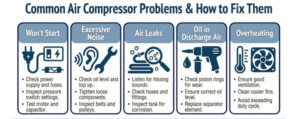
Reduced Air Pressure
If pneumatic tools lose power or pressure drops, filters, valves, or separator elements may require replacement.
Increased Energy Bills
A compressor working harder than necessary consumes more electricity.
Dirty filters and worn components often contribute to rising energy costs.
Excessive Noise
Grinding, knocking, or rattling sounds usually indicate worn bearings, belts, or internal components.
Oil Leaks
Oil leaks often signal damaged seals or gaskets.
Ignoring them can cause further internal damage.
Overheating
Blocked filters, low oil levels, or poor ventilation may cause compressors to overheat.
Address these issues promptly to prevent expensive repairs.
Genuine vs Aftermarket Spare Parts
One of the most common questions buyers ask is whether to choose genuine or aftermarket parts.
Genuine Parts
Original manufacturer parts are designed specifically for your compressor.
Advantages include:
- Guaranteed compatibility
- High manufacturing standards
- Reliable performance
- Longer lifespan
- Manufacturer warranty support
Quality Aftermarket Parts
High-quality aftermarket parts can provide excellent value when purchased from reputable suppliers.
Benefits include:
- Competitive pricing
- Wide availability
- Reliable performance
- Suitable for many compressor brands
Avoid purchasing low-cost, unverified components that may compromise performance or safety.
How to Choose the Correct Spare Part
Selecting the correct replacement component doesn’t need to be difficult.
Follow these simple steps.
Identify Your Compressor Model
Locate the manufacturer’s nameplate.
Important information includes:
- Brand
- Model number
- Serial number
- Year of manufacture
This information helps suppliers identify compatible parts.
Check the Part Number
Whenever possible, match the original part number.
This ensures compatibility and eliminates guesswork.
Verify Dimensions
Some replacement parts appear identical but differ slightly in size or specifications.
Always confirm:
- Diameter
- Thread size
- Pressure rating
- Flow capacity
Purchase from Trusted Suppliers
Reliable suppliers provide:
- Quality-tested components
- Technical support
- Manufacturer compatibility guidance
- Fast delivery
Working with experienced suppliers reduces purchasing errors.
The Importance of Preventive Maintenance
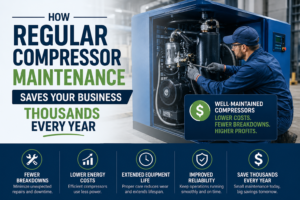
Preventive maintenance is far less expensive than emergency repairs.
A routine maintenance schedule should include:
Daily
- Check oil levels
- Listen for unusual sounds
- Inspect for leaks
Weekly
- Clean intake areas
- Inspect belts
- Drain moisture from tanks
Monthly
- Replace filters if necessary
- Check pressure settings
- Inspect hoses and fittings
Annually
- Replace separator elements
- Service valves
- Perform full compressor inspection
Following a maintenance schedule significantly extends equipment life.
Common Mistakes to Avoid
Many compressor failures result from avoidable maintenance mistakes.
Avoid these common errors:
Buying Parts Based Only on Appearance
Components that look identical may have different specifications.
Always verify part numbers.
Ignoring Maintenance Intervals
Waiting until parts fail increases repair costs and downtime.
Using Incorrect Lubricants
Not all compressor oils are interchangeable.
Using the wrong lubricant can damage internal components.
Purchasing Low-Quality Parts
Cheap replacement components often wear out faster and may damage surrounding equipment.
Investing in quality parts saves money over time.
How Spare Parts Improve Energy Efficiency
Energy costs represent one of the largest operating expenses for industrial air compressors.
Clean filters, efficient separator elements, and properly lubricated components reduce energy consumption by allowing compressors to operate at their designed efficiency.
Replacing worn components before they fail helps:
- Lower electricity costs
- Improve airflow
- Reduce pressure loss
- Minimize unnecessary motor load
Small maintenance investments often produce significant long-term savings.
Why Downtime Is So Expensive
Unexpected compressor breakdowns affect more than just maintenance budgets.
Downtime can result in:
- Lost production
- Delayed customer orders
- Increased labour costs
- Emergency repair charges
- Reduced customer satisfaction
Keeping essential spare parts readily available allows maintenance teams to resolve issues quickly and minimise operational disruption.
Why Choose a Specialist Spare Parts Supplier?
A specialist supplier offers more than just replacement components.
They provide:
- Expert technical advice
- Access to a wide range of compressor brands
- High-quality replacement parts
- Competitive pricing
- Fast delivery
- Ongoing customer support
Partnering with a knowledgeable supplier helps businesses maintain reliable compressed air systems while reducing long-term operating costs.
Final Thoughts
Choosing the right air compressor spare parts is essential for maintaining reliable performance, reducing energy costs, and avoiding unexpected downtime. Whether you’re replacing filters, separator elements, belts, valves, or lubricants, selecting high-quality components designed for your compressor model ensures maximum efficiency and longer equipment life.
Rather than waiting for components to fail, adopt a proactive maintenance strategy and source replacement parts from a trusted supplier. Investing in quality spare parts today can save your business significant repair costs, improve productivity, and keep your compressed air system operating at peak performance for years to come.
By making informed purchasing decisions and following a regular maintenance schedule, you’ll protect your investment, enhance operational efficiency, and ensure your air compressor continues to deliver dependable performance whenever your business needs it.