How Regular Compressor Maintenance Saves Your Business Thousands Every Year
Compressed air is often referred to as the “fourth utility” after electricity, gas, and water. It powers production lines, pneumatic tools, automation systems, packaging equipment, and countless industrial processes across manufacturing, automotive, construction, food processing, pharmaceuticals, and healthcare. When an air compressor is operating efficiently, businesses enjoy consistent productivity and reliable performance. However, when maintenance is neglected, even a minor issue can quickly escalate into an expensive repair or complete system failure.
Many businesses only think about their air compressor when it stops working. Unfortunately, reactive maintenance often results in costly downtime, emergency repair bills, lost productivity, and higher energy consumption. In contrast, a proactive maintenance programme ensures your compressor continues to perform efficiently while significantly reducing operating costs.
Regular compressor maintenance isn’t simply about replacing filters or topping up oil—it’s about protecting one of your company’s most valuable assets. In this guide, we’ll explore how consistent maintenance can save your business thousands of pounds every year while improving efficiency, reliability, and equipment lifespan.
Why Compressor Maintenance Is Essential
Air compressors operate under high pressure and often run for many hours every day. Over time, internal components naturally wear due to friction, heat, vibration, dust, and moisture.
Without regular maintenance, these issues gradually reduce efficiency and increase the likelihood of breakdowns.
Routine servicing helps to:
- Improve equipment reliability
- Prevent unexpected failures
- Reduce repair costs
- Lower electricity consumption
- Extend compressor lifespan
- Improve air quality
- Protect connected equipment
Preventive maintenance is far less expensive than emergency repairs or complete compressor replacement.
The Hidden Cost of Poor Maintenance
Many businesses underestimate how expensive compressor neglect can become.
Ignoring routine maintenance can lead to:
- Unexpected production downtime
- Emergency service call-outs
- Expensive replacement parts
- Higher electricity bills
- Reduced compressor lifespan
- Damaged pneumatic equipment
- Missed customer deadlines
- Lost revenue
A single compressor failure can halt an entire production line, costing far more than regular servicing ever would.
1. Reduce Expensive Downtime
Downtime is one of the biggest financial risks for businesses that rely on compressed air.
If an air compressor fails unexpectedly, operations may come to a complete stop.
Employees remain idle while maintenance teams diagnose the issue, replacement parts are ordered, and repairs are completed.
Regular inspections identify worn components before they fail, allowing maintenance to be scheduled during planned shutdowns rather than during busy production periods.
Replacing inexpensive components like filters, belts, seals, and separator elements can prevent major failures that would otherwise require costly repairs.
2. Lower Your Energy Bills
Air compressors are among the largest consumers of electricity in many industrial facilities.
As components wear, compressors become less efficient.
Common causes of increased energy consumption include:
- Dirty air filters
- Blocked oil filters
- Worn separator elements
- Air leaks
- Incorrect pressure settings
- Poor lubrication
When airflow becomes restricted, the compressor motor works harder to produce the same amount of compressed air.
Routine maintenance restores efficiency, allowing the compressor to operate with less energy while maintaining consistent performance.
Even small improvements in efficiency can produce substantial annual savings on electricity costs.
3. Extend Equipment Lifespan
An industrial air compressor represents a significant investment.
Replacing a compressor prematurely can cost thousands of pounds, not including installation and lost productivity.
Routine maintenance protects critical components by reducing friction, preventing overheating, and maintaining proper lubrication.
Replacing inexpensive wear items at the right time helps prevent damage to more expensive internal parts.
With proper maintenance, many compressors continue operating reliably for well over a decade.
4. Prevent Major Mechanical Failures
Small problems rarely stay small.
A clogged filter today may become an overheated compressor tomorrow.
A worn belt may eventually damage bearings and pulleys.
A leaking seal could result in oil contamination and internal component wear.
Regular inspections identify these issues before they develop into expensive mechanical failures.
Early intervention almost always costs less than major repairs.
5. Improve Air Quality
Compressed air quality is especially important in industries such as:
- Food manufacturing
- Beverage production
- Pharmaceuticals
- Electronics
- Healthcare
- Laboratories
Dirty filters or damaged separator elements can introduce oil, moisture, and contaminants into the compressed air supply.
Routine replacement of filtration components ensures clean compressed air while helping businesses maintain product quality and regulatory compliance.
6. Reduce Emergency Repair Costs
Emergency repairs are almost always more expensive than planned maintenance.
Unexpected breakdowns often require:
- Urgent technician call-outs
- Overnight shipping for spare parts
- Weekend labour charges
- Production delays
- Temporary equipment rental
Preventive maintenance dramatically reduces the likelihood of emergency situations.
Scheduling maintenance during quieter production periods allows businesses to control repair costs and minimise disruption.
7. Protect Other Equipment
The compressor is only one part of the compressed air system.
Poor-quality compressed air can damage:
- Pneumatic tools
- Air cylinders
- Control valves
- Automation equipment
- Production machinery
Replacing filters and separator elements protects the entire compressed air system while reducing maintenance requirements across the facility.
8. Improve Workplace Safety
Compressed air systems operate under high pressure.
Neglected equipment increases the risk of:
- Pressure failures
- Air leaks
- Oil leaks
- Overheating
- Component failure
Routine inspections ensure safety valves, pressure switches, hoses, and fittings remain in good working condition.
A properly maintained compressor creates a safer working environment for employees.
Essential Compressor Components That Require Regular Maintenance
Several components naturally wear over time and should be inspected or replaced according to the manufacturer’s maintenance schedule.
Air Filters
Air filters prevent dust and debris from entering the compressor.
Replacing clogged filters improves airflow and reduces energy consumption.
Oil Filters
Oil filters remove contaminants from compressor lubricant.
Clean oil protects bearings, gears, and other moving parts.
Separator Elements
Separator elements remove oil from compressed air.
Replacing worn separators improves efficiency while reducing oil carryover.
Compressor Oil
High-quality lubricant reduces friction and controls operating temperatures.
Always use the correct oil specified for your compressor.
Belts
Drive belts transfer power from the motor to the compressor.
Worn belts should be replaced before they slip or break.
Seals and Gaskets
These small components prevent oil and air leaks.
Routine replacement helps maintain pressure and system efficiency.
Pressure Switches
Pressure switches control compressor cycling.
Faulty switches can reduce efficiency and increase wear.
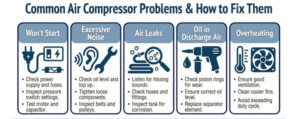
Signs Your Compressor Needs Maintenance
Watch for these warning signs before a minor issue becomes a major problem.
- Reduced air pressure
- Increased electricity bills
- Frequent cycling
- Oil leaks
- Excessive vibration
- Unusual noises
- Overheating
- Poor air quality
- Slow equipment performance
- Frequent system shutdowns
Addressing these symptoms early usually prevents more expensive repairs later.
Building a Preventive Maintenance Schedule
An effective maintenance programme doesn’t have to be complicated.
Daily
- Check oil levels.
- Listen for unusual noises.
- Inspect for leaks.
- Monitor pressure readings.
Weekly
- Drain moisture from the receiver tank.
- Inspect hoses and belts.
- Clean intake vents.
Monthly
- Check filters.
- Inspect pressure controls.
- Examine fittings and valves.
Quarterly
- Replace filters if required.
- Inspect separator elements.
- Check motor performance.
Annually
- Replace worn seals and gaskets.
- Service safety valves.
- Replace separator elements where recommended.
- Conduct a complete compressor inspection.
Following a structured maintenance schedule helps prevent unexpected failures while extending equipment life.
Why Quality Spare Parts Matter
The quality of replacement components directly affects compressor performance.
Premium spare parts offer:
- Better durability
- Improved reliability
- Higher efficiency
- Longer service intervals
- Lower operating costs
- Reduced risk of failure
Cheap, low-quality alternatives may save money initially but often wear out faster, leading to more frequent repairs and higher long-term expenses.
Choosing quality replacement parts protects your investment and ensures reliable compressor performance.
Partner with a Trusted Spare Parts Supplier
Working with an experienced supplier gives your business access to reliable replacement components, expert technical support, and fast delivery when maintenance is required.
A trusted supplier can help you identify the correct filters, separator elements, lubricants, valves, belts, seals, and other essential components for your compressor model, ensuring compatibility and long-term performance.
Having a dependable source for spare parts also reduces delays during scheduled maintenance and minimises the risk of unexpected downtime.
Final Thoughts
Regular compressor maintenance is one of the smartest investments a business can make. While it may seem like an additional operational expense, preventive maintenance consistently delivers significant long-term savings by reducing energy consumption, preventing costly breakdowns, extending equipment life, and improving workplace productivity.
From replacing filters and lubricants to inspecting belts, seals, and pressure controls, every maintenance task contributes to keeping your compressor operating at peak efficiency. A proactive approach helps avoid emergency repairs, protects connected equipment, and ensures a reliable supply of compressed air for your daily operations.
By implementing a planned maintenance schedule and using high-quality spare parts from a trusted supplier, your business can save thousands of pounds each year while improving efficiency, reducing downtime, and maximising the return on your compressor investment.